- Dec 8, 2025
- 5 min read
CRM, ERP & HR Management: The All-in-One Backbone of Modern Business Growth
A CRM system is designed to help businesses manage customer interactions, sales pipelines, and service operations—all in one place. It gives teams a complete view of every customer, enabling better communication and smarter decision-making.
Key Benefits of CRM are Centralized Customer Data – Track leads, contacts, deals, and communication history. Sales Automation – Automate follow-ups, pipeline updates, quoting, and reminders. Improved Customer Support – Manage tickets, service requests, and response times. Accurate Sales Forecasting – Understand trends and plan better.
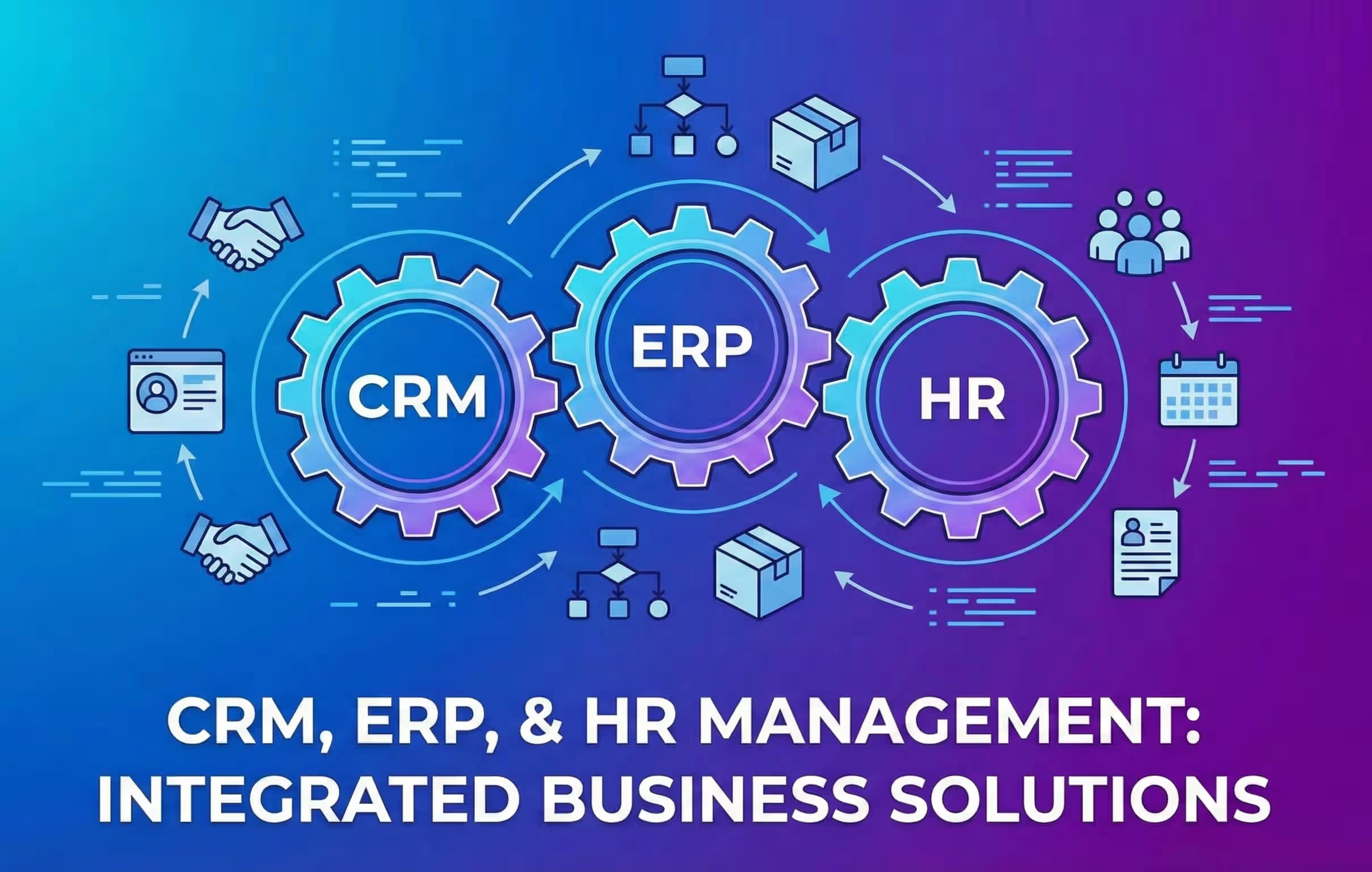
An ERP system connects and automates all core business functions—inventory, finance, purchasing, production, and more—so teams operate smoothly without duplication or errors.
Real-time Inventory & Stock Control – Track stock levels, reduce wastage, and prevent shortages. Finance & Accounting Automation – Manage invoices, payments, ledgers, and compliance. Supply Chain Optimization – Monitor vendor performance and purchasing cycles. Operational Visibility – Get complete, real-time insights across departments.
HR Management System: Empower Your Workforce A strong business needs a strong team, and an HR Management System (HRMS) helps simplify everything related to employees—from onboarding to payroll to performance reviews.
Key Benefits of HRM Attendance & Leave Automation – Track attendance, shifts, overtime, and leave requests. Payroll Management – Generate accurate salaries, deductions, and statutory compliance. Employee Self-Service – Reduce admin work by enabling employees to update their own records. Performance Tracking – Set goals, evaluate performance, and reward top talent.